
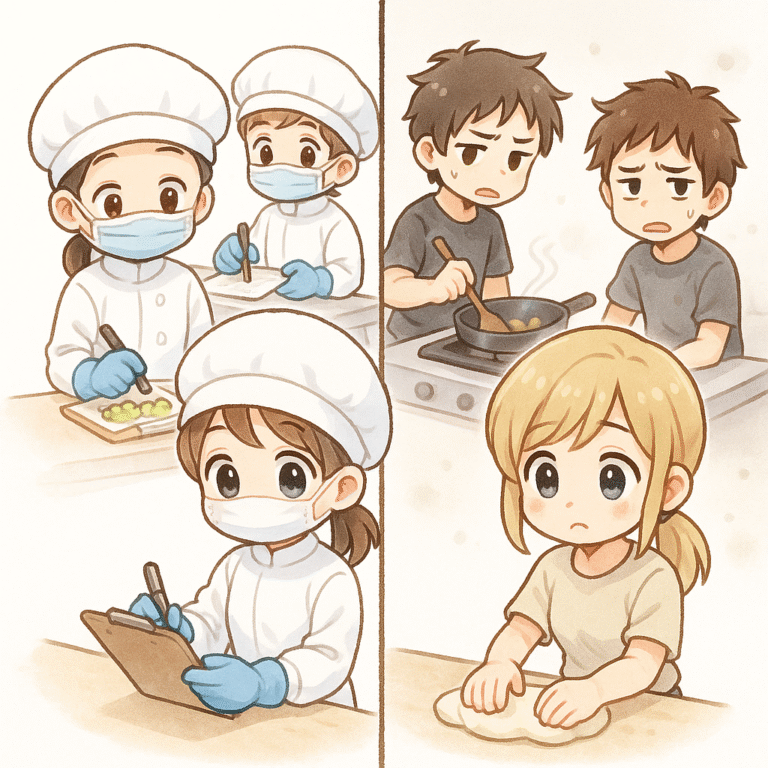
When food safety culture beats enforcement
Food safety doesn’t break down because of one bad decision. It breaks down when small lapses go unchallenged, when “just this once” becomes the norm.
In kitchen environments, peer pressure can quietly shape how teams behave. When some staff abandon hygiene practices and nothing happens, others start doing the same. But food safety is not about getting caught or not.
This post explores how peer dynamics influence hygiene, and why culture matters more than rules.
Peer pressure is real in every food operation
Food businesses are high-pressure, fast-paced environments. When rules are inconsistently enforced, people tend to look sideways instead of upward. They follow what the person next to them is doing, not what the SOP says.
What this looks like in practice:
✔ Removing masks or skipping gloves because “others don’t bother”
✔ Rushing food prep without checking temperatures
✔ Skipping logs or cleaning steps when no one is watching
Left unchecked, peer pressure builds a new standard, almost always a lower one.
Culture matters more than enforcement
Regulations and audits are important. But they’re not daily motivators, only culture can do that.
A strong food safety culture looks like this:
✔ Staff remind each other to follow hygiene steps; not out of fear, but habit
✔ Safety practices are part of training, onboarding, and leadership modelling
✔ Mistakes are corrected constructively, not ignored
✔ Even without external pressure, standards stay high
In short: culture sustains what enforcement can’t.
How to build and protect a food safety culture
Culture is built through consistency and reinforcement.
Practical tips:
✔ Reinforce the “why” behind hygiene, make it about protection, not punishment
✔ Lead by example, people follow what they see
✔ Celebrate consistency “Thanks for logging temps every day—nice work.”
✔ When peer pressure shows up, call it out early and respectfully
The goal isn’t perfect compliance, it’s shared ownership.
Final thoughts.
Food safety built on culture, rather than just enforcement, is stronger, more resilient, and very much more likely to last.
When teams abandon standards, it’s rarely because they don’t care. It’s because they stop seeing those standards in action. That’s where leadership begins. Whether you’re a team lead or a new staff member, your actions shape the norm.
Need help to create those everyday habits?
Food Forward is here to help you.
Get in touch with us today!