
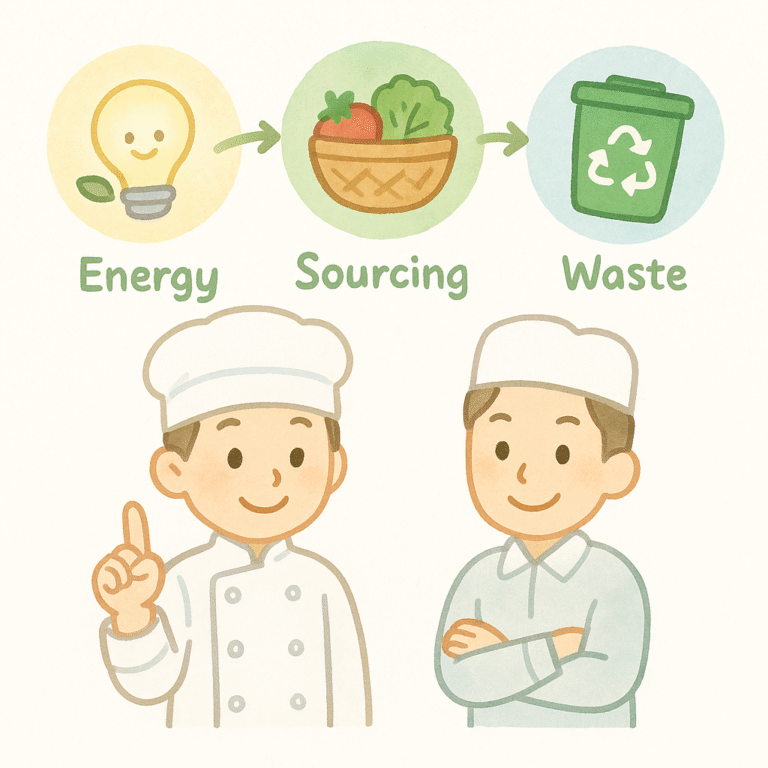
Carbon footprint reduction for F&B businesses
Reducing your business’s carbon footprint isn’t just about going green, it is about staying relevant, saving costs, and building for the long-term.
Whether you’re running a café, central kitchen, or food manufacturing facility, small, targeted changes can make a big difference. This post breaks down where emissions might come from, and how F&B businesses can take practical steps toward a more sustainable operation.
What is a carbon footprint and why does it matter?
Your carbon footprint is the total greenhouse gas emissions your business generates, from raw ingredients to the energy used in your kitchen.
Sustainability isn’t a trend, it’s a business responsibility:
✔ Growing pressure from consumers and buyers to be more sustainable
✔ Rising utility and packaging costs
✔ New regulations and sustainability reporting requirements
✔ Climate change impacts on food supply chains
Source of carbon emissions in food operations
You don’t need to fix everything at once but knowing where to start is half the battle.
In food operations, emissions usually come from five key areas:
✔ Ingredients – especially meat, dairy, and imported items
✔ Packaging – plastic use, overpackaging, non-recyclable materials
✔ Energy use – ovens, refrigeration, air-con, lighting
✔ Transport & logistics – frequent small deliveries or inefficient routing
✔ Food waste – decomposing food releases methane, a powerful greenhouse gas
Practical ways to reduce your footprint
These steps not only cut emissions, but they also often lead to cost savings and more efficient systems.
Start with quick wins:
✔ Switch to energy-efficient appliances and LED lighting
✔ Optimise batch cooking and equipment scheduling to cut idle time
✔ Use reusable containers and bulk packaging
✔ Reduce deliveries by consolidating orders
Next-level changes:
✔ Review your menu and cut down on high-impact items
✔ Work with local and regional suppliers
✔ Join carbon audit or sustainability benchmarking schemes
Track what matters
You can’t manage what you don’t measure.
Simple tools include:
✔ Utility bills tracking (monthly energy and water usage)
✔ Waste logs
✔ Supplier data on sourcing and packaging
✔ Online carbon calculators for small businesses
Build a culture of improvement
Carbon reduction isn’t a one-time project, it builds resilience, supports your brand, and prepares you for future regulations.
To embed sustainability into your business:
✔ Involve your team in setting goals and spotting opportunities
✔ Share your wins, customers appreciate honesty and progress
✔ Train staff on energy-saving habits and smart sourcing
✔ Review progress regularly and update targets as you grow
Final thoughts.
Reducing your carbon footprint isn’t about perfection, it is about progress.
Even small changes in how you run your kitchen or source ingredients can help your business become more future-ready.
Need help identifying opportunities or tracking your footprint?
Food Forward is here to help you.
Get in touch with us today!